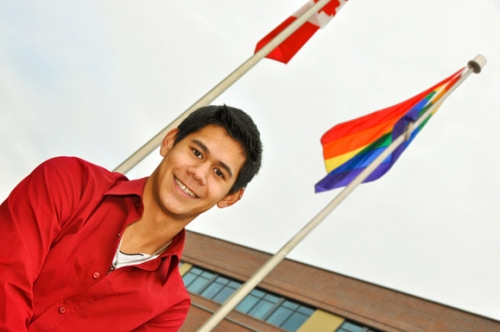
In celebration of Pride Month, I would like to share a bit of hope I see in and for the LGBTQ2S+ community.
In the fifty years since the Stonewall riots the LGBTQ2S+ community has established itself and continues to evolve as it works towards authentic equity and inclusion. The time and tireless efforts of the community and activists for recognition has resulted in the space for mentorship within the community, a connection I felt missing since coming out.
Coming out in my teen years during the early aughts meant my experience of discovering the community was nowhere near as difficult as those that came out in the decades before me when discrimination was still codified as acceptable. I do not mean to imply that we have reached the point where individuals can feel completely safe being themselves, however, my queer emergence was during the grey area between the removal of formal and legal barriers, such as the national recognition of gay marriage in 2005, the replacement of open social stigma with well-meaning questions, but before community supports were openly available. As a youth I felt disconnected from the community as its events, places, and relationships still socially and legally necessitated the age of majority for safety. Turning to friends and family, they were in as unfamiliar territory as I was and unable to guide me through my self-discovery. I felt tension between finally realizing who I was and the barriers to learning what it meant, waiting until I was an adult and allowed to join in and find out.
Beyond the missing understanding and structure required for welcoming a youth like myself into the community, there are deep scars from the previous decades that stunted meaningful connections. Many members of the community were understandably still fearful of the social stigma that insinuated their life was dangerous, immoral, or unclean and there is still a deep conflation between sexual orientation as an aspect of identity and the sexualization of an individual. Perhaps, most significantly, a generation was lost to the indifference and prejudice of the AIDS crisis.
Today I am so pleased that LGBTQ2S+ youth can find formal and informal connections and support from members of the community and our allies. From Gay-Straight Alliances (GSAs) in schools, online resources and groups, to local programs. I beam with pride that youth will not face the same dissonance between adolescence and adulthood that I experienced as it is already a challenging stage of life. We know that all youth need caring adults and supportive peers to navigate our increasingly complex world as they forge their identities and self-perception. I am invigorated when I cannot keep track of all the different opportunities available today for LGBTQ2S+ youth. It is what motivates me to give back as a mentor with Big Brothers Big Sisters of Calgary and Area in their PRISM program, as I understand how it feels without that connection and my responsibility to share our history and progress. It is noticing these subtle changes between the generations that proves to me there is more acceptance and equity in the world.
Want to Learn More about Being a PRISM Mentor? By connecting teen or adult mentors to LGBTQ2S+ youth, mentors help young people achieve goals and overcome challenges. Learn more here.