When I started my blog, making sure diverse voices were part of the content was important to me. This also means there are times when my voice doesn’t need to take up space, and this has been true of the last few weeks.
In this time there have been so many important conversations happening about the murders on the James Smith Cree Nation, the passing of Her Majesty Queen Elizabeth II, the war continuing to rage in Ukraine, the first in-person United Nations General Assembly post-pandemic, and the second annual National Day for Truth and Reconciliation.
And so, for me, the last few weeks have been about reading, listening, sharing my thoughts when asked in dialogue and sitting in the knowledge that there can often be ways that two viewpoints can walk alongside each other.
Sometimes this can be in the form of two people with opposing views, and sometimes both viewpoints can live within an individual. For example, being inspired by the Queen’s leadership while also being very aware of the significant damage the institution of the monarchy has caused to Indigenous peoples throughout world history.
These last few weeks have also reminded me how important and simultaneously difficult it can be to engage in the types of conversations world events and dialogue like these demand. But we need to, no matter how uncomfortable we might feel because it is often in this discomfort that some of our greatest learning can take place. I certainly know this has been true for me.
We also need to learn how to listen, and specifically listen to hear and try to understand where the other person is coming from, or as a colleague teaches try to understand how someone got to the opinion they hold, what factors influenced it - culture, family, upbringing, etc. It’s also important to remember that listening or having conversations like these doesn’t mean we agree. Sometimes one or both perspectives change, sometimes come closer to each other, but many times also remain as they are. No matter the outcome, these conversations can be incredibly challenging.
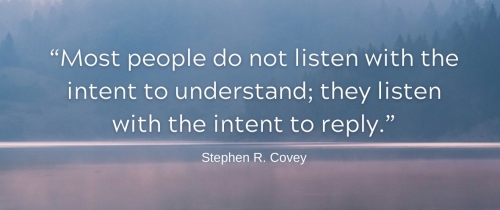
These conversations are also complicated by the fact that as humans we don’t usually listen well. When someone is talking to us, and this can be about any topic, we are usually trying to think about our response at the same time. In doing so, we aren’t really listening.
For me, one of the most important things I’ve learned over the years, particularly through my coach training is how to truly listen when someone is talking and only respond once they finish. This means that sometimes I need to pause and take a moment to capture my thoughts or say something like “That’s really given me a lot to reflect on, and I just need a moment to think about my response.” The former of the two is also something humans find awkward – silence. In my experience I’ve also seen some of the best responses, dialogue and reflection come from that silence.
And so, the question I leave you with this week is twofold: How would you rate your listening skills, and what areas in a conversation could you take time to learn more about through listening?
#WhatsYourSPARK Blog